

Justin Ogilvie: Learning to Get Lost at Canvas Method
Back in 2024, we sat down with artist and Canvas Method co-founder Justin Ogilvie for our video Hooked on Discovery, exploring experimentation, artistic growth and the role new materials can play in a creative practice. Our conversation ranged much further, touching on Justin's approach to teaching and the philosophy behind Vancouver's Canvas Method. Here, we're revisiting some of those conversations, and some ideas we didn't have room to explore the first time around.
Walking into an art class for the first time can be intimidating.
Maybe you haven't picked up a paintbrush since school. Perhaps you've been making art quietly at home but have never worked alongside other artists. Or maybe you're simply curious, but not entirely convinced that an art class is somewhere you belong.
For Justin, that uncertainty isn't something you need to overcome before you begin. Curiosity, experimentation and a willingness to learn are part of the process.
Canvas Method welcomes students at different stages of their creative lives, with many classes geared towards beginner and intermediate artists alongside more advanced students looking to develop their skills. And while learning technique is central to the school's approach, Justin's philosophy of art education goes much further.
It's about acquiring the skills to make what you want to make. And then giving yourself permission to get a little lost.
You don't need to know how to paint before taking a painting class
It sounds obvious, but it's easy to forget: you take an art class because there are things you don't know yet.
At Canvas Method, those things can be very practical. Students learn how to draw the human figure and facial features, paint landscapes and still lifes, set up compositions and work from a live model.
As Justin explains, many Canvas Method classes are aimed specifically at people who are still developing those foundations.
"A lot of our classes are really geared towards beginners and intermediate level people, and we have some advanced level students as well that want to kind of hone their skills and their techniques."
Technique, he says, is "probably the most tangible thing" students gain from studying at Canvas Method.
But that doesn't mean you need to arrive already feeling confident.
Intimidation is real, particularly when you're entering an unfamiliar creative space. Canvas Method is deliberately built around a culture where different levels can coexist, without competitiveness or elitism. The emphasis is instead on passion, curiosity, experimentation and learning.
A beginner's mindset isn't something to be embarrassed about. Being humble, open and interested in learning can be one of the best places from which to begin.

Justin Ogilvie on why technique gives you the freedom to play
Justin's approach to teaching is partly rooted in his own experience of learning to paint.
"I'm self-taught," he explains. "I never had a drawing or a painting instructor pick up my brush and show me how to draw or paint."
For years, he says, that was a source of frustration. Eventually, however, being left to work things out for himself also created a certain freedom: "You create your own problems and come up with your own solutions."
Later, when Justin began teaching, he noticed that many of his students approached learning from the opposite direction.
"Everybody wanted to have technique so that they could loosen up and feel free, rather than starting with freedom and looseness and then letting technique come in later."
That observation became part of the thinking behind Canvas Method.
Rather than separating technical training from creativity, Justin sees artistic development as a combination of three elements: technical skill, creativity and conceptual development. Bringing all three together, he believes, creates a more holistic experience for the student.
Technique matters. But technique isn't the destination.
Make it personal
Learning how to paint a still life is one thing. Deciding what your still life might communicate is another.
At Canvas Method, Justin encourages students to bring the two together.
"If you're making a still life painting, grab 10 objects from your house that are an expression of who you are as a human being," he suggests. Arrange those objects and suddenly you're not simply practising how to reproduce an apple and a pear sitting on a table. You're learning technique while making something that carries a little of your own life within it.
It's a simple example of how technical, creative and conceptual thinking can coexist, even when you're still learning the fundamentals.
And you don't need to wait until you've mastered drawing or painting to begin thinking about what interests you.

Bring a beginner's mindset
There's another reason not to worry too much about arriving with an established artistic identity: even experienced artists don't necessarily know where they're going.
Students often come to Justin interested in developing a distinctive style or "finding their voice." He describes both as "moving targets."
You might find an approach that feels like your own and work with it for several years. Then your interests change. New ideas arrive. The work moves somewhere else.
"I'm always encouraging people to be experimental, to try new approaches," Justin says.
His own practice reflects that philosophy. After years of developing his skills as a figurative painter, he reached a point where technical proficiency alone was no longer enough to keep the work interesting.
He began disrupting his carefully rendered portraits, sometimes spending hours building up a realistic image before dragging paint across it with a squeegee, partially destroying what he'd made.
The aim was to find a point where the painting could "hover in between creation and destruction."
For Justin, uncertainty became productive.
Get comfortable getting lost
Justin describes himself as "an expressive, experimental artist who's quite honestly hooked on discovery."
"If I know where I'm going in advance," he says, "then there's no point for me to make the work."
Of course, not knowing what you're doing can feel very different when you're a beginner. It's easy to interpret uncertainty as evidence that you're doing something wrong.
Justin encourages students to think about it differently.
He compares experimentation to travelling somewhere unfamiliar. At home, familiarity can cause us to tune out our surroundings. Travel somewhere new and suddenly the senses wake up: you're looking, listening and noticing because you don't already know what to expect.
"Experimentation is about developing your sensitivity," he says.
In the studio, allowing yourself not to know exactly where something is going can create that same attentiveness. Rather than racing towards the "right" result, you begin responding to what's actually happening in front of you.
The goal is to never be finished
Make something that doesn't matter
All of which sounds wonderful until you're standing in front of a blank surface worrying about ruining it.
Justin has a practical strategy for that too, something he calls f&ckits. Before beginning the day's "serious" work, he encourages students to spend some time making playful sketches, doodles or material experiments without worrying about producing a finished artwork.
Think of it as warming up.
Instead of trying to make a picture, you might simply see what happens when different materials meet. Make marks. Mix things. Try combinations you haven't tried before.
"The goal is to never be finished," Justin explains. "You're always just playing."
Removing the expectation of a successful outcome changes the stakes. And when you're having fun, you may find yourself spending longer with the materials, noticing more and becoming more receptive to unexpected possibilities.
It's also an exercise you can try anywhere. You don't need a finished concept or an ambitious blank canvas. You just need somewhere to start.
Good materials should help, not intimidate
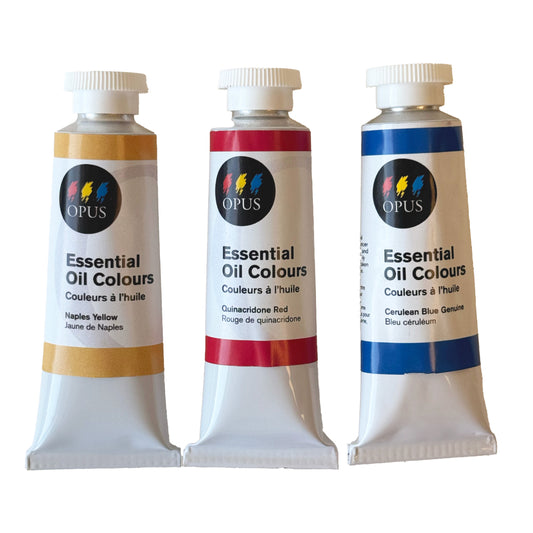
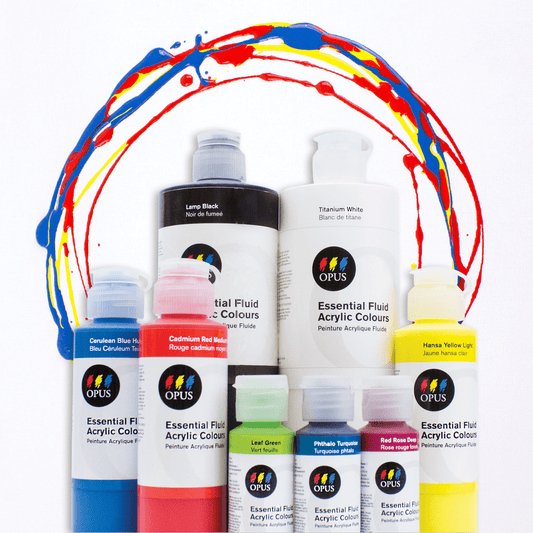
The same principle applies when choosing art supplies. Good materials aren't about making your practice more serious or professional, they're about giving yourself tools that respond to what you're trying to do.
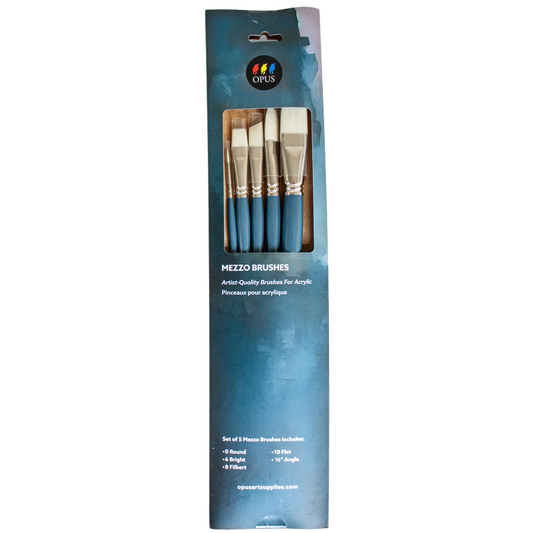
This can be particularly important when you're learning. A paint with a good pigment load will give you a clearer sense of how colour mixes and behaves. A well-made brush will hold its shape, carry paint predictably and respond to changes in pressure. The right paper or painting surface can make it easier to understand a technique because you're seeing what the material is actually capable of.
With poor-quality supplies, beginners can end up fighting their materials without realising it. A colour that turns muddy, a brush that won't hold a point or paper that buckles and pills can easily feel like a failure of technique when the tool itself is part of the problem.
That doesn't mean you need the most expensive version of everything. Starting with a small selection of reliable materials is often far more useful than filling a studio with supplies you don't yet understand. Choose the best quality you can comfortably afford for the techniques you're learning, get to know how those materials behave, and build from there.
As your skills and interests develop, your toolkit can develop with you.

Find a community, not a competition
Perhaps one of the biggest differences between making art alone and joining a class is simply being around other people who are learning too.
At Canvas Method, competitiveness isn't the point. Students arrive with different amounts of experience, but the shared commitment is to learning, curiosity and experimentation.
Teachers care about helping students acquire the techniques they need — not as a means of imposing a particular way of making art, but so those skills can eventually become a source of freedom.
A regular class can also provide something that's surprisingly difficult to create alone: dedicated time to make.
Showing up, setting out your materials and working alongside other people can become its own kind of creative ritual. Instead of waiting for inspiration, art becomes somewhere you go and something you practise.
Start where you are
You don't need to arrive at your first class with a style, a portfolio or even the confidence to call yourself an artist.
You can arrive because you're curious.
Technique can be learned. Materials can be explored. Your artistic voice will probably change anyway. And getting lost occasionally might turn out to be one of the most useful parts of the process.
For Justin, learning and experimentation aren't opposing forces. Learning the foundations gives you more possibilities to play with them.
So if you've been thinking about taking a class but wondering whether you're experienced enough to walk through the door, perhaps the better question is simply: what would you like to learn?

Justin Ogilvie
Justin Ogilvie is a Vancouver based artist, educator, and co-founder of Canvas Method. He received a BFA from Emily Carr University of Art and Design, and a MFA from the University of Alberta. For the past 25+ years, he has actively taught and exhibited within numerous public and private institutions, been the recipient of numerous awards and prizes, and is part of international collections.
Justin’s painting practice informs his teaching philosophy, which brings together traditional and contemporary approaches, focusing on technical skills in realism, creative experimentation and conceptual development.
His recent work explores a hybrid notion of self, collapsing together suggestions of bodies, cartoony presences, digital ghosts, and discreet painterly gestures within imaginary compositions.
Justin is a passionate, energetic and supportive instructor. No matter what stage you’re at, you can expect to learn quickly, break through barriers, and discover your voice as an artist!
To see Justin's work, please visit justinogilvie.com and follow justin_ogilvie.