


Painting the Garden in Gouache: Inside Celan Bouillet’s Practice
Whether spring has sprung in your part of the world or not, step into any Opus store this May and you’ll find yourself surrounded by gardens in bloom. Petals unfurl across windows, colour gathers in soft rhythmic clusters, and for a moment, the outside world feels quieter, slower, more attentive. At the centre of it all is the work of Celan Bouillet, whose botanical gouache paintings anchor this season’s Garden is Already Painting campaign.
There is something immediately inviting about Bouillet’s work. It doesn’t ask for expertise or prior knowledge, only that you pause long enough to really look. Shapes overlap and breathe. Colours hum against one another. The compositions feel at once considered and alive, as though they’ve grown into being rather than been imposed.
For Bouillet, that sense of ease begins with a lifelong pull toward paint itself.
“I have always been drawn to paint,” she says. “The bright pigments, the ability to make it flow or build it up thick, the joy of feeling a brush move across the page. Painting has always felt like solving a puzzle through colour and form.”
Gouache entered her practice during graduate school, where she found herself surrounded by illustrators drawn to its graphic clarity. One material in particular stood out.
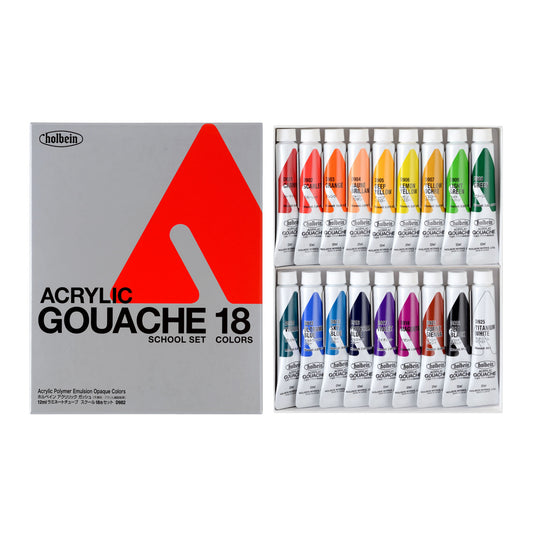
“Holbein Acryla Gouache has such vibrant colours and a beautiful velvety matte finish,” she explains. “I immediately loved it.”
What began as curiosity quickly settled into something more permanent.
“I found gouache incredibly versatile, and it quickly became my favourite medium.”
That versatility continues to shape the way she works today. Gouache allows her to move fluidly between approaches, from solid, graphic shapes to delicate washes that echo watercolour or ink. It can be layered, thinned, reworked, even used to stain paper.
“The flexibility of the medium suits the way I like to work,” she says. “Moving between graphic shapes, layered marks, and softer passages of colour.”
All of her works on paper and collages are built this way, through a process that embraces both control and openness.
The Garden as Subject and Starting Point
If gouache provides the language, the garden provides the subject, and the emotional core.
Bouillet grew up next to a daylily farm and wildlife reserve in Georgia, surrounded by plant life in all its shifting forms. That early proximity has stayed with her.
“That love of the natural world has never left me,” she says. “My paintings reflect that devotion to the forms and colours found in plants and landscapes.”
But her interest goes beyond surface beauty. Looking closely at plants reveals something more complex, which she describes as both wild and quietly overwhelming.
“I love the wildness and the almost sublime feeling you get when looking closely at plants,” she says. “They become a great starting point for larger narratives within the work.”
A leaf, a stem, a bloom can hold tension, history, even contradiction. Order and chaos exist side by side.

Looking, Then Making
This kind of attention is not rushed. Bouillet’s paintings emerge slowly, through a series of studies that allow the work to take shape over time. She begins with rough sketches to capture an initial idea, then moves into colour studies with coloured pencil, followed by small gouache tests before committing to a final surface.
By the time she reaches the finished piece, something has shifted.
“I have a strong sense of what the painting is trying to say,” she explains. “It has developed a personality of its own.”
That phrase feels key. Her work is not simply composed, it is listened to. The act of looking becomes a form of dialogue, one that continues through each stage of making.
Materials That Support the Process
Her material choices reflect that same sensitivity. Certain colours return again and again, not just for their visual impact, but for how they feel to work with.
“I love how tranquil and rich ultramarine blue can feel,” she says. “It is just as calming to paint with as it is to look at.”
Elsewhere, she is drawn to combinations that vibrate gently against one another.
“When the balance is right,” she adds, “the whole painting seems to sigh.”
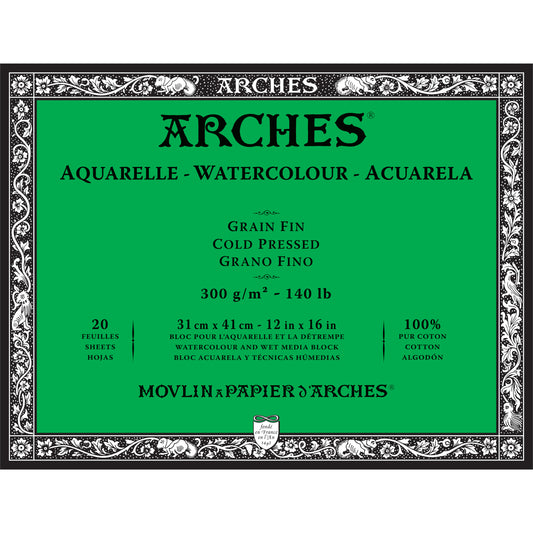
Surfaces matter too. Bouillet often works on Arches watercolour paper or stained rice paper for collage, while larger pieces are built on hand-stretched canvas mounted to panel, chosen for the subtle resistance it offers. Even tools like frisket find their place in the process, supporting the layered, exploratory nature of her compositions.
Bringing the Work into the World
This balance between structure and freedom carries through to how her work meets the world beyond the studio. Throughout May, Bouillet’s paintings will appear across Opus storefronts, moving from the quiet space of making into a more public, everyday context.
“I love seeing my work in public spaces,” she says. “It makes me happy to know that art can appear in unexpected places, creating moments of joy for people passing by.”
That accessibility is central to her practice. Alongside studio work, she continues to engage in public art, drawn to the idea that art can belong to everyone, not just those who seek it out.
“I hope the work adds a little whimsy to someone’s day.”
It’s a sentiment that sits closely with the spirit of the campaign itself. Not an instruction, but an invitation. A reminder that creativity doesn’t need to be earned.

A Way Back In
For those who might feel distant from their own creative instincts, gouache offers a particularly gentle way back in.
“It’s a vibrant and versatile paint that encourages experimentation,” Bouillet says.
In her teaching, she sees how quickly people can begin to explore once the pressure is lifted. Layers can be built, patterns developed, and, crucially, mistakes can be painted over.
“It creates a low-pressure environment for play and discovery.”
That sense of permission, to try, to adjust, to begin again, runs quietly through everything she makes.
The Garden Is Already Painting
And when things feel uncertain, when direction falters, she returns to where it all began.
“Whenever I need to feel calm, I go to gardens and take a long walk,” she says. “I look closely at the plants and take everything in. If I ever feel lost in my practice, I return to gardens again to sketch and observe how things are growing and changing.”
In that way, the idea that the garden is already painting becomes less of a metaphor and more of a method. The work is already there, unfolding slowly, waiting to be noticed.
“You have to find the subject that lights you up,” Bouillet says. “For me, gardens are endlessly inspiring. Their history, symbolism, natural beauty, and the tension between order and wildness always give me something new to explore.”
Step into the store, pause for a moment, and you might begin to see it for yourself.
Meet Celan through our Artist to Artist video:
About the Artist
Celan Bouillet is a mixed media painter and installation artist based in North Vancouver, BC. Raised in the American South, she grew up on storytelling, textiles, and sweeping landscapes, threads that continue to weave through her work today. She received her BFA from the University of Georgia and her MFA from the Maryland Institute College of Art. Bouillet’s work is included in private and public collections, including Bush Intercontinental Airport and MD Anderson Cancer Center, and she has recently completed public art projects for the Vancouver Mural Festival and the Richmond Animal Shelter. Her work has been featured in publications including ArtMaze Mag, Create Magazine, Houstonia Magazine, and the Houston Chronicle.

See more of Celan Bouillet's artwork on her website celanbouillet.com and follow her journey on Instagram @celanbouillet