


Choosing the Right Watercolour Paper: Why Your Surface Matters
Watercolour is full of surprises. It blooms, it pools, it moves in ways we can’t always predict. And while pigments often get the spotlight, it’s the paper underneath that quietly shapes the experience.
Whether you’re stepping into your first class, returning to painting after time away, or refining a long-held practice, understanding your paper helps build confidence. When you know how your surface will respond, you’re free to focus on what matters most … your ideas.
So what makes watercolour paper unique? How do you choose the right one for you?
Weight: How Much Water Can This Paper Handle?

Watercolour paper is designed to manage moisture, but the weight of the sheet determines how confidently it does so.
Paper weight is measured in pounds (lb) or grams per square metre (gsm). The higher the number, the thicker and more structurally stable the sheet.
90 lb (190 gsm) – Lightweight and suitable for light washes or sketch-based work.
140 lb (300 gsm) – The most versatile and widely used weight. Strong enough for layering and expressive washes without requiring stretching in most cases.
300 lb (640 gsm) – Heavyweight and highly resilient. Designed to handle substantial water application with minimal warping.
Behind the scenes, heavier sheets contain more fibre, giving them greater stability when wet. That means less distortion, better surface integrity, and a more predictable painting experience.
Lighter papers may benefit from stretching before painting if you’re working with heavy washes, while 300 gsm sheets can often be used without preparation.
For many artists, from students to professionals, 140 lb / 300 gsm cold press offers an ideal balance of strength, flexibility, and accessibility.
Texture: How Paper's Surface Influences Pigment
Beyond weight, surface texture plays a defining role in how paint behaves.
Texture is created during the pressing and drying stages of papermaking. The interaction between screen, felt, and pressure produces distinct surfaces, each influencing pigment movement, edge softness, and granulation.
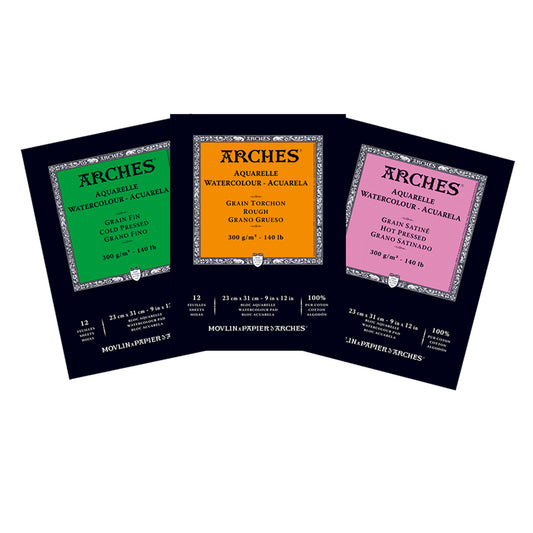
Hot Press (HP) – Smooth and even. Ideal for fine detail and crisp edges.
Cold Press (CP or NOT) – Lightly textured and the most versatile option. Balances control with expressive movement.
Rough – Highly textured. Encourages granulation and atmospheric effects as pigment settles into the valleys of the sheet.

Cold press remains the most popular choice because it offers enough texture to engage the paint while maintaining stability for layering and technique-building.
Understanding surface texture isn’t about choosing the ‘best’ option, it’s about recognising how paint and paper interact. When you understand that relationship, you gain control, and control builds confidence.
Choosing a Paper Format: Sheets, Pads, or Blocks?

Watercolour paper is available in several formats, each suited to different ways of working.
Single Sheets – Ideal for larger work or for artists who like to tear paper down to custom sizes. Some full sheets feature natural deckled (feathered) edges, while others are clean-cut.
Pads – Convenient and portable. Great for classes, studio practice, or working on the go.
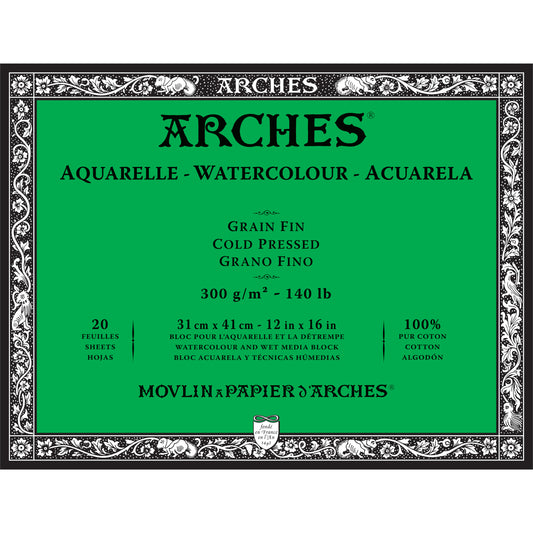
Blocks – Glued on all four sides to reduce buckling, allowing you to paint directly on the sheet without stretching.
If you’re just starting out, pads offer a ready-to-use, approachable option. Blocks are especially helpful if you work wet and want added stability without extra preparation.
Fibre Matters: Cotton vs. Alpha Cellulose Paper
Fibre content plays an important role in how a sheet performs under water.
100% Cotton Paper
Cotton fibres are longer and more flexible than wood pulp fibres. This gives cotton paper:
Increased strength
Greater absorbency
Enhanced durability for heavy layering and lifting
-
A softer, more traditional feel

Many premium watercolour papers are made from cotton, often on slower cylinder mould machines that produce a strong, randomly distributed fibre structure. These papers are particularly valued for highly saturated or archival work.
Many budget-friendly watercolour papers and sketchbook surfaces are made from purified wood pulp, with naturally occurring acidic components like lignin removed. These sheets are generally less resilient than cotton-based papers, but being acid-free helps prevent yellowing over time, supporting the longevity of your work.
Opus Essential Watercolour Paper is made from high-grade alpha cellulose, a carefully refined wood pulp with impurities removed for greater stability and consistency. While it does not contain cotton, it is acid-free and properly sized for watercolour.
Sizing is what controls how water and pigment behave on the sheet. Quality watercolour paper is internally sized (sizing added to the pulp before the sheet is formed) and often surface sized as well, helping the paper resist pilling and maintain surface strength during washes and layering.
Before selecting the Opus Essential Watercolour Paper, extensive testing ensured it performed consistently; holding up under water, resisting surface breakdown, and providing dependable results for artists at every stage.
As Opus Art Supplies Founder, David van Berckel, explains:
‘For me, it comes down to trust. Artists shouldn’t have to fight their paper. There’s a lot of very cheap watercolour paper out there that doesn’t perform well. Ours is acid-free, properly sized, and made from high-grade alpha cellulose. It may not be the finest cotton paper, but it behaves the way a good watercolour paper should — it takes the water, holds the pigment, and stays intact. That’s what gives people the confidence to focus on their painting.’

For learning, experimenting, and developing technique, a thoughtfully made cellulose paper provides strength, reliability, and accessibility, without the higher investment of cotton.
Our Opus Essential Watercolour Paper is offered in 140 lb / 300 gsm cold press, available in single sheets, packs and our new pads, and blocks. It’s a versatile, dependable surface designed to meet artists where they are, whether building foundational skills or working through new ideas.
There isn’t one ‘perfect’ paper, there’s only the one that supports the way you like to work.
Try This: A Simple Paper Test

Before committing to a full painting, try a quick test:
Lay down a generous wet wash.
Let it sit briefly.
Gently lift a bit of pigment from the painted area with a damp brush.
Does the surface hold? Does it pill? Does the pigment move in a way you enjoy? Testing builds familiarity and familiarity builds confidence.
Pairing a dependable surface with thoughtfully formulated paints, like our Opus Essential Watercolours, ensures colour clarity and flow are supported from brush to sheet. When you understand how weight affects buckling, how texture shapes pigment, and how fibre and sizing influence absorption, you gain agency. You make informed choices. You walk into the studio, or into the store, with clarity instead of uncertainty. And that clarity creates room for experimentation. Because the right paper doesn’t just hold your paint, it holds your process.